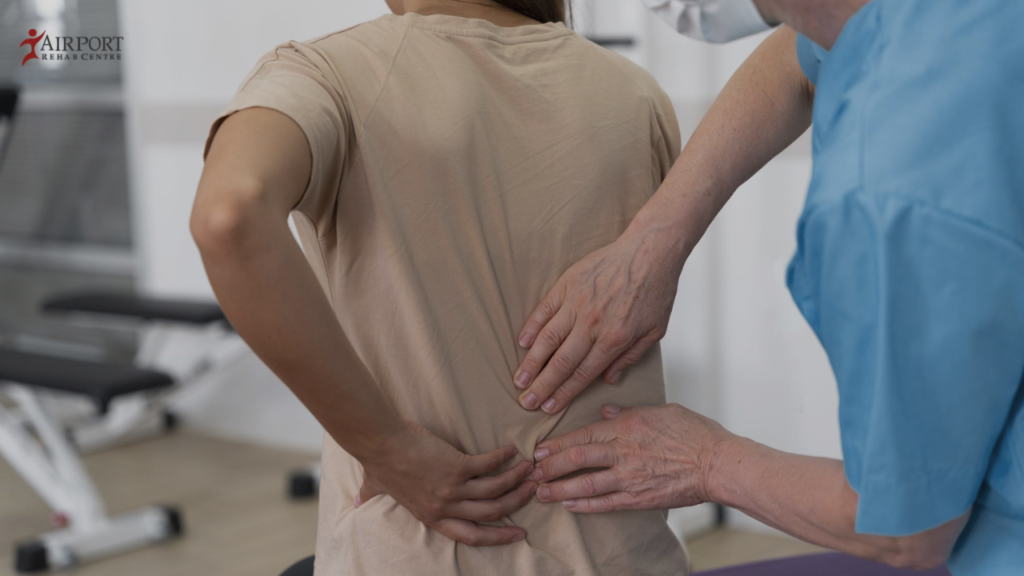
Let me ask you something honest. Have you ever felt like your spine is just… compressed? Like someone took your whole body and pushed down from the top, leaving you shorter, tighter, and more achey than you used to be? This feeling is not in your head. It is the real physical result of gravity, aging, injury, and the simple act of living. Every day, your spine bears the weight of your body, your bags, your stress. Over time, the cushions between your vertebrae, those soft discs that act like shock absorbers, start to wear down. They bulge, they dry out, they press on nerves. That is when the pain starts. That is when bending to tie your shoe becomes a project. Also that is when sitting through a flight leaves you barely able to stand. Spinal decompression at our airport rehab centre offers a different path. It is a gentle, non-surgical way to give your spine the space it desperately needs.
What Spinal Decompression Actually Does
Let me explain this in plain terms so you know exactly what we are talking about. Spinal decompression is a treatment that uses a special table to gently stretch your spine. You lie down, fully clothed, on a comfortable padded surface. A harness fits around your hips or sometimes your upper body, depending on where your pain lives. Then the table does its work. It applies a slow, controlled pulling force to your spine, creating space between your vertebrae. This space is crucial. When your spine is compressed, the discs get squeezed. They lose fluid, they bulge, they press on nerves. But when we create space, something remarkable happens. The discs can retract, pulling back in from where they bulged. Healing fluid and oxygen rush into areas that have been starved. Pressure on nerves eases. Pain begins to quiet down.
The Science of the Vacuum
Here is the part that sounds almost too good to be true, but it is real. When the spine stretches gently, it creates a vacuum effect inside the discs. Think of a sponge being squeezed and then released. When you squeeze it, water pushes out. When you let go, it sucks water back in. Your spinal discs work the same way. Years of compression have squeezed fluid out. They are dry, brittle, and less able to cushion your movements. The gentle stretch of decompression creates negative pressure inside the disc. That vacuum pulls bulging material back toward the center. It also draws in fresh nutrients, oxygen, and fluid. Your discs rehydrate. They plump back up. They start doing their job again. This is not a temporary fix. It is helping your body repair itself from the inside.
Who This Treatment Helps Most
Spinal decompression is not for every type of back pain, but for the right person it can be life changing. If you have a herniated or bulging disc, this treatment targets that exact problem. That shooting pain down your leg that doctors call sciatica often comes from a disc pressing on a nerve. Decompression can take that pressure off. If you have degenerative disc disease, that wear and tear that makes you feel older than you are, decompression helps rehydrate those dried-out cushions. If you have worn spinal joints, what they call facet syndrome, the space created can ease that grinding ache. Even some cases of pinched nerves in the neck respond beautifully. The first step is always an honest conversation. We look at your history, your symptoms, any scans you have. We make sure this is the right tool for your specific problem at Airport rehab centre.
What a Session Actually Feels Like
I want you to be able to picture this clearly so there are no surprises. You will walk into our quiet room at the airport rehab centre. The table looks comfortable, like something you might actually want to lie on. You stay fully clothed. The therapist fits a soft harness around your hips or upper body. It is not tight or uncomfortable, just secure. Then the machine starts. You feel a gentle pulling sensation, slow and rhythmic. It is not a yank or a jolt. It is more like a wave, building and releasing. Most people find it deeply relaxing. Some read. Some close their eyes and drift. Also some even fall asleep. A typical session lasts about twenty to thirty minutes. When it is over, you sit up slowly and notice something. You feel lighter. Taller. Less compressed. That feeling is not imagined. It is real space, real relief.
The Cumulative Nature of Healing
One session of spinal decompression feels good, but the real magic happens over time. Your spine has been compressed for years, maybe decades. It takes more than one visit to undo that. Most people need a series of sessions, usually spread over several weeks. Each visit builds on the last. The discs get more hydrated. The nerves get more space. The muscles around your spine learn to relax instead of guard. You might notice changes in small ways at first. Turning your head feels easier. Getting out of the car hurts less. By the third or fourth session, the bigger shifts happen. The pain that used to be constant becomes occasional. The movements you avoided become possible again. Consistency is the key. Showing up, session after session, is how you give your body the time it needs to rebuild.
What Works Alongside Decompression
Spinal decompression is powerful, but it works best as part of a complete approach to your spine health. Your muscles need to be part of the conversation too.
Strengthening Your Support System: When we create space in your spine, your muscles need to learn to hold that space. Specific core exercises help build a natural brace around your back. These are not crunches or heavy lifts. They are precise movements that wake up the deep muscles meant to support you.
Releasing Tight Muscles: The muscles around an injured spine are almost always tight and angry. They have been guarding for months, maybe years. Hands-on therapy, massage, or Graston Technique can calm them down. Relaxed muscles allow your new spinal alignment to stick.
Retraining Your Movement Patterns: You have learned to move in ways that protect your pain. Now that the pain is easing, you need to learn new patterns. Your therapist will teach you how to bend, lift, and sit in ways that keep your spine safe.
What Comes After
The goal of spinal decompression is not to have you coming back forever. It is to get you to a place where your spine can hold its own. Where your discs are healthy enough to cushion your movements. Where your muscles are strong enough to support your structure. Also where you trust your back again. For some people, that means occasional maintenance visits. For others, it means graduating to a home program that keeps them well. Either way, you carry the benefits forward. You walk differently. You sit differently. And you lift differently. The space we created becomes part of your new normal. And that normal includes less pain, more movement, and a whole lot more life.