Let me start with something that might hit close to home. You hit your head. Maybe it was a fall on some ice before your trip. Maybe it was a car accident on the way to the airport. Or maybe your heavy bag fell from the overhead bin and caught you on the temple. In the moment, you shook it off. That is what most of us do. We have flights to catch, meetings to attend, families to get home to. So you kept moving. But days later, something feels wrong. You cannot focus on your book the way you used to. Bright lights in the terminal feel like they are stabbing your eyes. You are tired in a way that sleep does not fix. You feel foggy, irritable, and not quite like yourself. This is the quiet, confusing reality of a concussion. And at our airport rehab centre, we understand exactly what you are going through.
Why Old Advice Was Wrong
For a long time, the standard advice for a concussion was simple. Go home, lie in a dark room, and do nothing until you feel better. We now know that this approach often does more harm than good. Complete rest for more than a day or two can actually slow your recovery. Your brain needs gentle, graded stimulation to rebuild its pathways. It needs movement, within a safe window that does not flare your symptoms. It needs visual challenges that retrain your eye tracking and focus. Also it needs physical activity that slowly increases your heart rate without making your headache worse. It needs someone who understands how to walk the line between too much and too little. This is the gap our airport rehab centre fills for travelers. We do not just tell you to rest. We give you a structured, personalized plan to guide you back to clarity.
The Symptoms You Might Not Connect to Your Head
Here is the tricky part about concussions. They do not always announce themselves with dramatic signs. You might not lose consciousness. You might not even remember hitting your head. The symptoms often creep in slowly, hours or days later. You might notice that you are more irritable with your family for no clear reason. Reading a menu or your phone screen might suddenly give you a headache. The busy airport environment might feel overwhelming in a way it never did before. You might feel dizzy when you turn your head quickly to check your gate. You might struggle to find words that used to come easily. Also you might feel anxious or sad without knowing why. These are all classic signs of a brain struggling to process information. Our team at the airport rehab centre is trained to spot these connections. We help you understand that you are not losing your mind. You are healing from an injury.
What Your First Visit Looks Like
Walking into our clinic after a head injury can feel strange because you look fine on the outside. You might worry that we will not believe how bad you feel inside. Let me put that fear to rest right now. Your first visit is a conversation, not a judgment. We ask about what happened, how you felt right after, and how you feel now. We ask about your sleep, your mood, your ability to focus at work or while traveling. Also we ask about your sensitivity to light, sound, and movement. Then we move through a series of simple, careful tests. We watch your eyes track a moving pen. We check your balance on different surfaces. Also we ask you to walk and turn and maybe do a small mental task at the same time. We test your neck, because the same impact that hurt your brain also strained your neck. These tests give us a clear picture of where your brain is struggling. From there, we build a plan that fits your life, your travel schedule, and your specific symptoms.
The Role of Your Neck in Concussion Symptoms
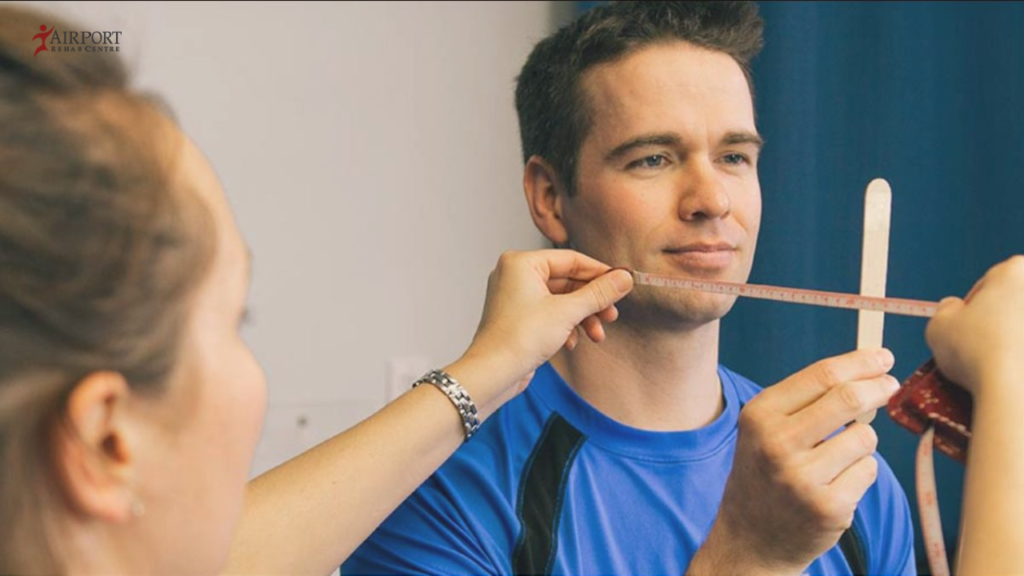
Here is something many people do not know. The same force that causes a concussion almost always strains your neck as well. Your neck muscles and joints get whipped forward and back, just like your brain. This neck injury can cause headaches, dizziness, and even difficulty focusing, all symptoms that mimic a concussion. Sometimes, treating the neck resolves most of the problem. This is why our assessment at the airport rehab centre always includes a thorough look at your neck. We check its range of motion, its strength, and its tenderness. We feel for tight spots and restricted joints. If your neck is part of the problem, we treat it. Gentle hands-on therapy, specific exercises, and postural guidance can make a significant difference in how you feel.
Why Travelers Need Specialized Care
If you move through airports regularly, a concussion hits you where you live. Travel demands that your brain process a huge amount of information quickly. Flight times, gate changes, security lines, boarding calls. It asks you to navigate crowded, noisy, brightly lit spaces. It requires you to remember where you put your passport, your bag, your boarding pass. A brain that is already struggling cannot meet these demands. You might find yourself missing flights, losing things, feeling overwhelmed in ways that never happened before. This is not you failing. This is your injury showing up where the demands are highest. Our airport rehab centre sits right in the middle of this environment. We understand what you are up against. We help you build strategies to navigate travel while you heal. Also we help you know when to ask for help, when to slow down, and when to rest.
The Path Back to You
The road out of a concussion is not always a straight line. You will have good days when you feel almost normal. You will have bad days when the fog rolls back in and scares you. This is normal. This is healing. It is not a sign that you are broken or that treatment is failing. It is a sign that your brain is processing the trauma in its own time. The key is consistency. Showing up for your sessions, doing your home exercises, pacing your activities, resting when you need to. Over weeks and months, the good days start to outnumber the bad. The fog lifts. The headaches quiet. The irritability fades. You start to recognize yourself again. This is the goal. Not just symptom relief, but the return of you. The person who reads books, who navigates airports with ease, who shows up fully for the people you love. That person is still there. We are just helping you find your way back.