Let me tell you about the kind of pain that makes you want to give up on finding relief. It is not the sharp pain of a fresh injury that gets your attention right away. This is the pain that settles in and refuses to leave no matter what you try. It lives in your heel every morning when you take your first steps out of bed. It hangs out in your elbow when you lift your coffee cup to take a drink. You have tried ice, heat, rest, and stretching, but nothing seems to work. Shockwave therapy at our airport rehab centre is designed specifically for this kind of stubborn, chronic pain that will not leave.
What Is Shockwave Therapy and How Does It Work?
Let me explain this in plain terms so you know exactly what we are talking about here. Shockwave therapy is a non invasive treatment that uses high energy sound waves to target injured tissue deep in your body. A handheld device delivers these waves directly to the area where you feel pain every single day. The waves penetrate deep into your body, reaching the places that hands alone cannot access. The sound waves create a microtrauma, a very small and intentional injury, in the damaged tissue itself. This sounds counterintuitive, but this controlled microtrauma wakes up your body’s healing response that has been stuck for too long.
What Happens Inside Your Body During Treatment?
Here is what happens on a cellular level when those sound waves hit your damaged tissue. They break up scar tissue and calcium deposits that have built up over many months or years. They stimulate the production of collagen, the protein that gives your tendons and ligaments their strength and flexibility. Also they increase blood flow to areas that have been starved of good circulation for far too long. They trigger the release of growth factors, natural chemicals in your body that promote real healing. They even desensitize the nerves in the area, reducing your perception of pain over time. All of this happens without a single cut, without anesthesia, and without any recovery period after treatment.
Who Is a Good Candidate for Shockwave Therapy?
Shockwave therapy is not for every type of pain, but for certain conditions it is remarkably effective. Plantar fasciitis is one of the most common problems we treat with this technology at our clinic. That stabbing heel pain that greets you every morning, the one that makes every step through the airport a misery, often resolves with shockwave. Tennis elbow and golfer’s elbow, those stubborn tendon pains near the joint that never seem to heal, respond beautifully to this care. Achilles tendinopathy, the deep ache in your heel cord that limits your walking, improves significantly with a few sessions. Rotator cuff tendinopathy, that shoulder pain that makes lifting your bag impossible, often finds real relief. Even some cases of chronic neck and back pain, where the tissue has been stuck for years, can improve with this treatment.
What Does a Shockwave Session Actually Feel Like?
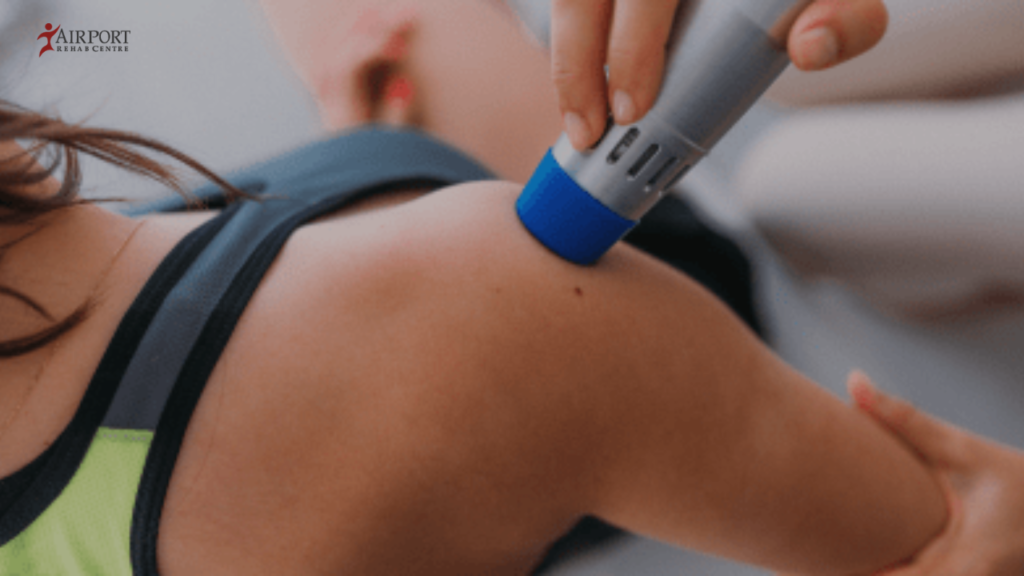
Let me walk you through what happens during a shockwave session so there are no surprises for you. You will come into our quiet room at the airport rehab centre between your flights or before you travel. The therapist will apply a gel to your skin, similar to what is used for an ultrasound at a doctor’s office. Then they place the handheld device against your skin, right over the area that has been bothering you for so long. The machine turns on, and you will feel a tapping sensation, rapid and rhythmic against your skin. Some people describe it as a woodpecker or a small jackhammer, though much more controlled in its force. The intensity can be adjusted up or down based on what you can tolerate. Your therapist will start gently and increase the force as you get comfortable with the sensation.
How Many Sessions Will You Need for Lasting Relief?
One session of shockwave therapy feels good, but the real healing happens over a series of visits. Your tissue has been stuck in a chronic state of injury for months or years. It takes more than one session to break that cycle completely and allow real healing to begin. Most people need three to five sessions, usually spaced one week apart for the best results. Each session builds on the last, creating more healing and more relief as you go along. The pain that used to be sharp becomes dull, then intermittent, then fades away over time. By the end of the series, the tissue that was stuck has finally been given the resources to heal for good. You walk through the airport differently because your body is finally free to do so without pain holding you back.
What Should You Expect After Your Session?
The real work begins after you leave our clinic and go about your normal day. Shockwave therapy triggers a healing response that continues for hours and even days afterward. You might feel some soreness in the treated area, like you did a deep workout in that specific spot. This is normal and even expected, it is your body processing the microtrauma and beginning the repair process. Drinking extra water helps flush out the metabolic waste that is being released from your tissues. Within a day or two, the soreness fades, and you might notice something shifting in your body. The pain that used to be constant becomes occasional, and movement starts to feel easier and more natural. Over the course of several sessions, the improvement builds until the pain that once defined your days has quieted significantly.
What Makes Shockwave Therapy Different from Other Treatments?
One of the things people appreciate most about shockwave therapy is what it helps them avoid. Surgery is a big step that comes with risks, recovery time, and no guarantee of success for everyone. Injections offer temporary relief but do not fix the underlying problem in your tissue. Medications mask the pain without healing the root cause of your suffering. Shockwave therapy sits in a different category altogether for chronic pain relief. It is non invasive, meaning no cuts, no stitches, and no hospital stays at all. It addresses the root of the problem, breaking up scar tissue and stimulating real healing from within. For many people, it is the bridge between living with chronic pain and finally moving past it for good. The relief is not just temporary, it lasts because your tissue has actually healed, not just been numbed. That is the difference that makes shockwave therapy worth trying for your stubborn pain.