Let me start with something we all know but rarely say out loud. Your body holds onto things. It holds onto stress from work, tension from travel, and old injuries that never quite let go. You can feel it in your shoulders at the end of a long day. You notice it in your lower back after sitting through a flight. It lives in your jaw when you are rushing to catch a connection. This holding is not a character flaw. It is your body’s way of protecting you, bracing for impact, getting ready for whatever comes next. The problem is that your body does not always know when to let go. The tension that helped you power through a deadline stays long after the deadline passes. The guard you put up during a stressful trip becomes your new normal.
What Massage Therapy Actually Means
When most people hear “massage,” they think of luxury spas and relaxation. And yes, massage can be deeply relaxing. But at our airport rehab centre, we practice a different kind of massage. It is clinical, targeted, and focused on solving problems. Your therapist uses their hands to find the spots where tension has taken up permanent residence. They feel for knots, tight bands, areas where tissue has become stuck together. Then they work to release those spots using specific techniques. This is not just about feeling good, though you will feel good. It is about restoring function. Tight muscles pull on joints, limit movement, and create pain patterns that spread through your whole body. Releasing that tightness changes everything.
What Happens in a Session
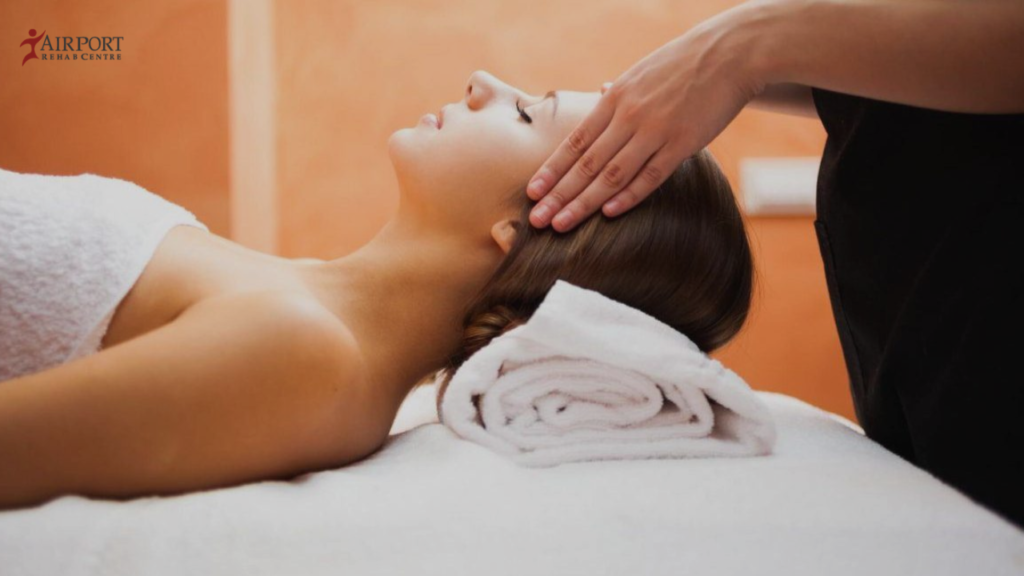
Let me walk you through what a typical massage session looks like so nothing feels unknown. You will come into our quiet room at the airport rehab centre. We will talk first about what is bothering you, where you hold tension, what you hope to gain. Then you will lie on a comfortable table, undressed to your comfort level, always covered by a sheet except for the area being worked on. The therapist uses oil or lotion to allow their hands to glide smoothly. They begin with lighter pressure, warming up the tissues, then move deeper into areas that need attention. Throughout the session, they check in with you. Is the pressure okay? Does this spot feel familiar? You are always in control. If anything feels wrong, you speak up. That is how we work together.
The Traveler’s Body
If you move through airports regularly, your body develops patterns that are hard to escape. You carry bags on one shoulder, pulling your spine into a curve. Also you sit for hours with your hips flexed and your shoulders rounded forward. You sleep in strange positions, twisting your neck at angles no pillow can truly fix. Over time, these patterns become your new normal. Muscles shorten on one side and stretch on the other. Joints lose their full range of motion. Pain becomes expected rather than surprising. Massage therapy at our airport rehab centre addresses these patterns directly. We work the shoulders that have been hauling luggage. Also we release the hips that have been flexed too long. We soften the neck that has been twisted through too many restless flights. You walk out feeling not just relaxed, but realigned.
What We Treat with Massage
The list of conditions that improve with massage therapy is surprisingly long. Low back pain, one of the most common complaints we hear, responds beautifully to skilled hands. Neck stiffness, whether from whiplash or just years of staring at screens, often releases with consistent work. Shoulder tension, that knot you cannot quite reach, softens under pressure. Headaches, especially those that start at the base of the skull, frequently trace back to tight muscles massage can release. Sciatica, the sharp pain shooting down your leg, can ease when the muscles around the nerve relax. Even plantar fasciitis, that stabbing heel pain, improves with massage to the calf and foot. At our airport rehab centre, we have seen all of these and more respond to the simple power of touch.
What You Feel After Massage Therapy
The immediate feeling after a good massage session is hard to describe to someone who has not experienced it. There is a lightness, a sense that something heavy has been lifted. Your shoulders drop lower. Your neck turns more easily. You take a deep breath and notice it reaches places it has not reached in weeks. Sometimes there is a mild soreness the next day, like after a good workout. This is normal. It is your body processing the release, clearing out the debris that was locked in those tight tissues. Drinking extra water helps flush it through. Within a day or two, that soreness fades and leaves behind a new ease of movement. You reach, bend, and turn without thinking about it. That is the goal.
Why Regular Massage Therapy Matters
One session feels wonderful. Regular sessions change your life. Chronic tension does not develop overnight, and it does not resolve overnight either. But when you commit to regular care, something shifts. Your baseline changes. The level of tension you used to accept as normal starts to feel unacceptable. You notice earlier when stress is building. You address it before it becomes pain. Your body learns that release is possible, that it does not have to stay clenched forever. For travelers passing through our airport rehab centre, regular massage becomes part of the rhythm. A visit before a long trip prepares you for the demands ahead. A visit after you land undoes the damage of the journey. Over time, you build a relationship with your body that serves you everywhere you go.
The Quiet Gift of Being Touched
There is something deeper here too, something we do not talk about enough. In a world that often feels disconnected, being touched with skill and care matters. It reminds you that you live in a body, that this body deserves attention, that you are worth the time. Massage therapy at our airport rehab centre offers that gift alongside the physical relief. It is someone paying close attention to exactly where you hurt, using their hands to make it better. That attention is healing in itself. It tells your nervous system that someone sees you, that someone cares, that you are not alone in this. For travelers who spend so much time moving through impersonal spaces, that feeling is precious. It is a reminder that even in the middle of a busy terminal, there is a place where you can stop, breathe, and let someone help you carry the weight.