Let me tell you about the kind of pain that makes you want to give up. It is not the sharp, sudden pain of a fresh injury. That kind of pain, at least, gets your attention and makes you do something about it. No, this is the pain that settles in and refuses to leave. It lives in your heel every morning when you take your first steps. It hangs out in your elbow when you lift your coffee cup. Also it wraps around your shoulder every time you reach for your suitcase in the overhead bin. You have tried ice and heat. You have tried rest and stretching. Even you have tried ignoring it, hoping it would just go away on its own. But it is still there, a quiet, stubborn reminder that something in your body is not working the way it should. Shockwave therapy at our airport rehab centre is designed specifically for this kind of pain. It is the treatment you turn to when nothing else has worked.
What Shockwave Therapy Actually Is
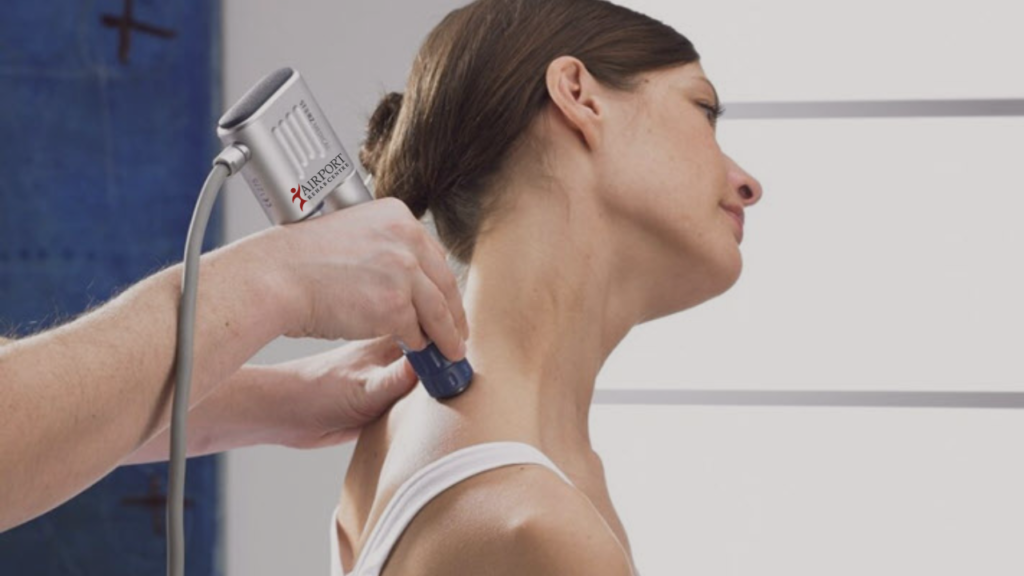
Let me explain this in plain terms so you know exactly what we are talking about. Shockwave therapy is a non-invasive treatment that uses high-energy sound waves to target injured tissue. A handheld device delivers these waves directly to the area where you hurt. The waves penetrate deep into your body, reaching the places that hands alone cannot access. This might sound intense, and the name “shockwave” does not exactly sound gentle. But the treatment is controlled, precise, and surprisingly tolerable. The sound waves create a microtrauma, a very small and intentional injury, in the damaged tissue. This sounds counterintuitive, I know. Why would you want to create more injury? Because this controlled microtrauma wakes up your body’s healing response. It tells your system that something needs attention. Fresh blood rushes in. Healing cells activate. The tissue that has been stuck in a cycle of pain and inflammation finally gets the signal to start repairing itself.
The Science Behind the Waves
Here is what happens on a cellular level when those sound waves hit your tissue. They break up scar tissue and calcium deposits that have built up over time. They stimulate the production of collagen, the protein that gives your tendons and ligaments their strength. Also they increase blood flow to areas that have been starved of circulation. They trigger the release of growth factors, natural chemicals that promote healing. They even desensitize the nerves in the area, reducing your perception of pain. All of this happens without a single cut, without anesthesia, without a recovery period. You walk in, we treat the area, you walk out. Over a series of sessions, the tissue that was stuck in a chronic state of injury begins to heal. The pain that you thought was permanent starts to fade.
Who This Treatment Helps Most
Shockwave therapy is not for every type of pain, but for certain conditions it is remarkably effective. Plantar fasciitis is one of the most common. That stabbing heel pain that greets you every morning, the one that makes every step through the airport a misery, often resolves with shockwave. Tennis elbow and golfer’s elbow, those stubborn tendon pains near the joint, respond beautifully. Achilles tendinopathy, the deep ache in your heel cord, improves significantly. Rotator cuff tendinopathy, that shoulder pain that makes lifting your bag impossible, often finds relief. Even some cases of chronic neck and back pain, where the tissue has been stuck for years, can improve. At our airport rehab centre, we do a full assessment first. We make sure your specific condition is a good match for this treatment. That honesty matters. We do not want to waste your time or your hope.
What a Session Actually Feels Like
Let me walk you through what happens so there are no surprises. You will come into our quiet room at the airport rehab centre. The therapist will apply a gel to your skin, similar to what is used for ultrasound. Then they place the handheld device against your skin, right over the area that has been bothering you. The machine turns on. You will feel a tapping sensation, rapid and rhythmic. Some people describe it as a woodpecker or a jackhammer, though much more controlled. The intensity can be adjusted. Your therapist will start gently and increase as you get comfortable. The sensation is not painless, but it is manageable. It is the kind of discomfort that tells you something is happening. A typical session lasts only five to ten minutes. When it is over, the device comes off, and you go about your day. There is no downtime, no bandages, no restrictions.
Why Travelers Need This Care
If you move through airports regularly, your body faces unique challenges. You carry heavy bags, often on one side, creating imbalances that stress your tendons and fascia. You stand for long periods in lines, putting constant pressure on your heels and knees. Also you sit in cramped seats, compressing your hips and shoulders. You rush, you stress, you sleep in strange positions. All of this lands in your soft tissue. The small problems that might heal easily in a sedentary person become chronic in a traveler. Your body does not get the rest it needs to repair itself. Shockwave therapy at our airport rehab centre addresses this cycle. It breaks through the chronic pain that travel creates. It gives your body the push it needs to finally heal, even while you keep moving.
The Non-Surgical Option
One of the things people appreciate most about shockwave therapy is what it helps them avoid. Surgery is a big step. It comes with risks, recovery time, and no guarantee of success. Injections offer temporary relief but do not fix the underlying problem. Medications mask the pain without healing the tissue. Shockwave therapy sits in a different category. It is non-invasive, meaning no cuts, no stitches, no hospital stays. It addresses the root of the problem, breaking up scar tissue and stimulating real healing. Also it offers a genuine alternative when other conservative treatments have failed. For many people, it is the bridge between living with chronic pain and finally moving past it.
What Success Looks Like
Success with shockwave therapy looks different for everyone. For some, it is walking through the airport without that familiar stab of heel pain. For others, it is lifting their suitcase into the overhead bin without wincing. And for many, it is simply sleeping through the night without being woken by an ache that has become normal. These victories matter. They are not small. They are the return of your life to you, piece by piece. The pain that used to dictate your choices, that used to make you say no to things you wanted to do, starts to lose its power. You move differently. You plan differently. Also you live differently. This is the goal. Not just less pain, but more freedom. More of the life you actually want to live, without the constant background hum of an injury that refuses to heal.